

We remember the early versions of
Game Maker
were a wonderfully accessible way into game design:
simple drag-and-drop tools, immediate results, and many
built in functions to construct your dreams. Hotline Café
is pleased to preserve this selection of surviving games
and experiments from that period.
These files are around two decades old and are presented as an archive rather than modern supported software. Expect period quirks, bad compatibility and several design decisions management can no longer explain. Many thanks to Mark Overmars , developer of the original Game Maker, for making this particular corner of teenage creativity possible.
These files are around two decades old and are presented as an archive rather than modern supported software. Expect period quirks, bad compatibility and several design decisions management can no longer explain. Many thanks to Mark Overmars , developer of the original Game Maker, for making this particular corner of teenage creativity possible.
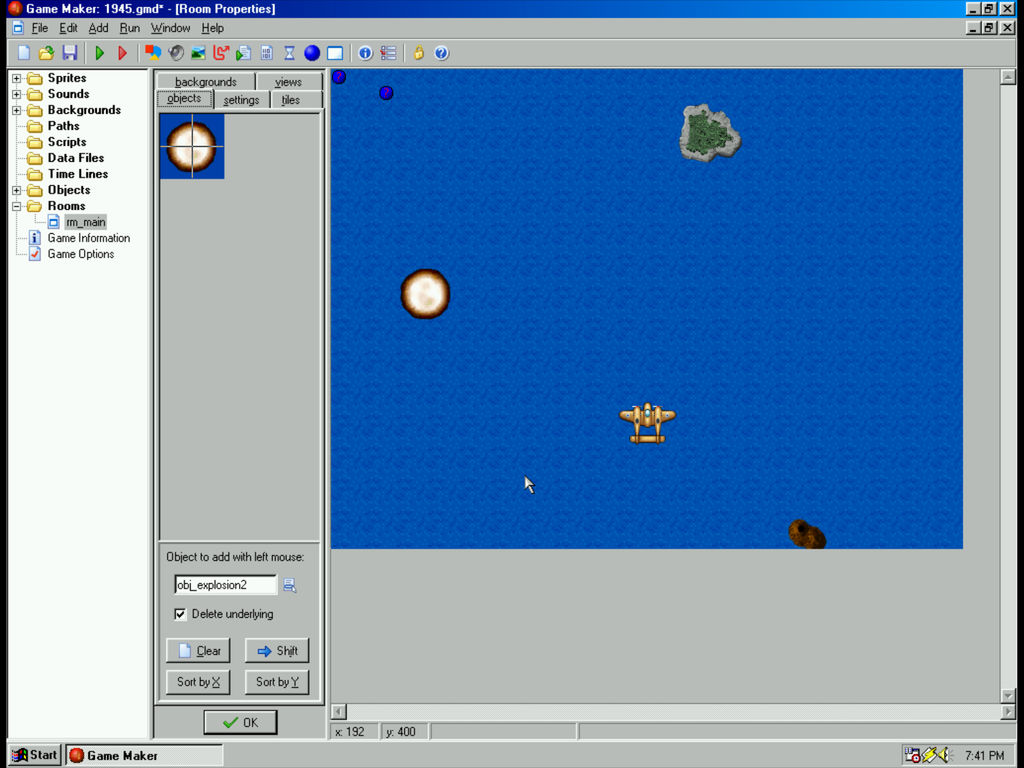
FPAINT (2005)
BOXVILLE (2006)
THE CITY OF PLISTON (2006)
STARDOG (2007)
NEON 3D (2008)
STARFLEET OPERATIONS (2008)
UTOPIA UNLIMITED (2009)
Armed with a demo of TrueSpace 3 and a newly registered copy of Game Maker 6, twelve-year-old Fionn concluded that the possibilities were limitless. The Enemy Lines became his first “complete” game and was released on the Game Maker Community forums.
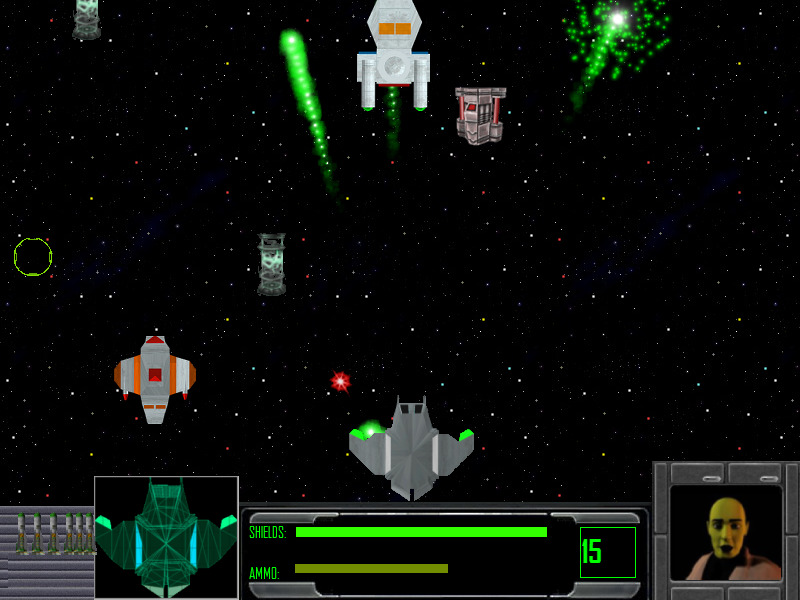 Fionn says the objective was to make something exciting.
The approved solution was an enthusiastic quantity of particle
effects in a primitive top-down space shooter. He had not
learned conventional coding yet, so the entire game was
assembled with Game Maker’s drag-and-drop actions.
Fionn says the objective was to make something exciting.
The approved solution was an enthusiastic quantity of particle
effects in a primitive top-down space shooter. He had not
learned conventional coding yet, so the entire game was
assembled with Game Maker’s drag-and-drop actions.
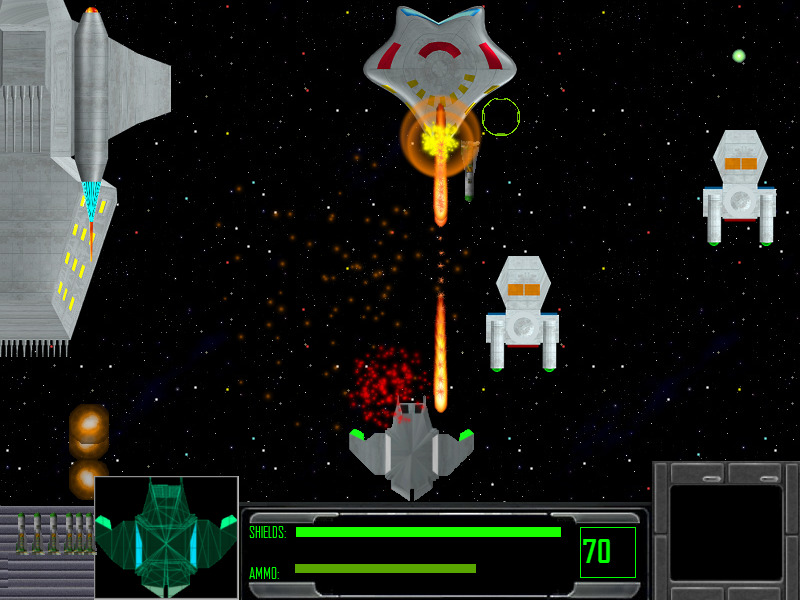 Movement is restricted to four directions, the action is
strangely slow, and it remains impressively difficult to
determine what is happening.
Fionn particularly enjoyed packaging it with promotional
artwork, misspelt HTML documentation, ship specifications
and backstory. The readme even identifies the school library
computers with enough graphics memory to launch it.
Premium compatibility information for the discerning
2005 customer.
Movement is restricted to four directions, the action is
strangely slow, and it remains impressively difficult to
determine what is happening.
Fionn particularly enjoyed packaging it with promotional
artwork, misspelt HTML documentation, ship specifications
and backstory. The readme even identifies the school library
computers with enough graphics memory to launch it.
Premium compatibility information for the discerning
2005 customer.
Fionn made a small suite of creative programs for children, including a music sequencer, image editor and drawing program. Only FPaint appears to have survived.
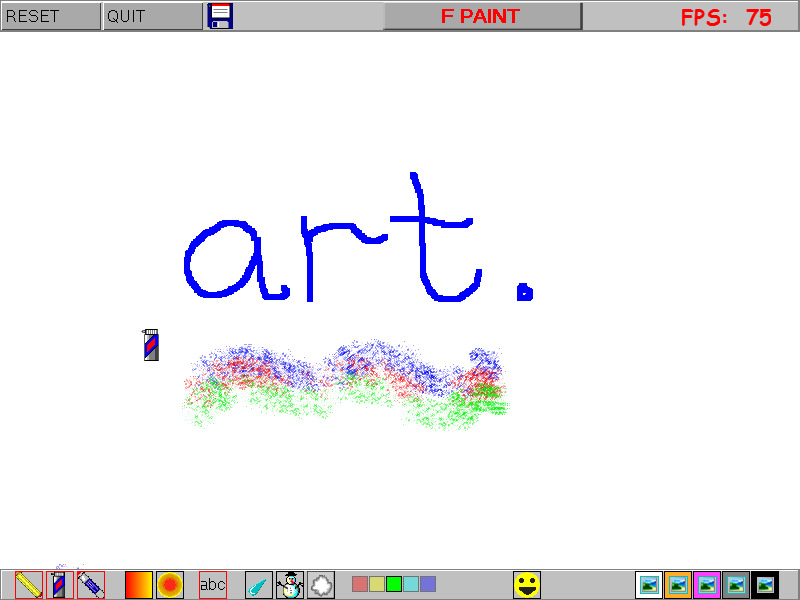
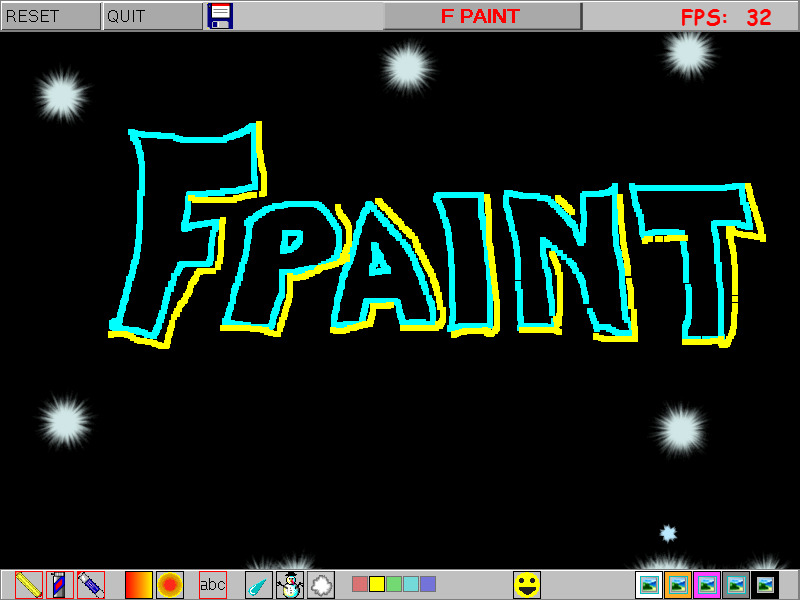 FPaint permits drawing in five luxurious colours. Fionn had
not yet discovered drawing surfaces, so every pencil pixel
exists as a separate object.
A sufficiently ambitious picture can therefore reduce the
frame rate below 30 FPS on hardware many years newer than
the program itself.
FPaint permits drawing in five luxurious colours. Fionn had
not yet discovered drawing surfaces, so every pencil pixel
exists as a separate object.
A sufficiently ambitious picture can therefore reduce the
frame rate below 30 FPS on hardware many years newer than
the program itself.
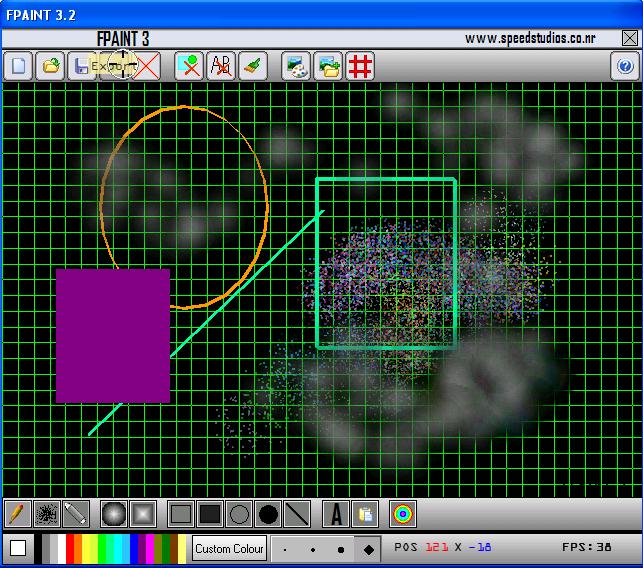
 Later editions reached version 3.2 and became somewhat closer
to MS Paint. Fionn forgot to back them up. Hotline Café would
be genuinely delighted to hear from anyone who somehow still
possesses a copy.
Later editions reached version 3.2 and became somewhat closer
to MS Paint. Fionn forgot to back them up. Hotline Café would
be genuinely delighted to hear from anyone who somehow still
possesses a copy.
Boxville was Fionn’s first GTA clone and, by his own description, a Frankenstein’s monster of borrowed material. Evil Cookie’s fake-3D tutorial supplied the buildings, screenshots from San Andreas became vehicles, and Poser 4’s default models provided the pedestrians.
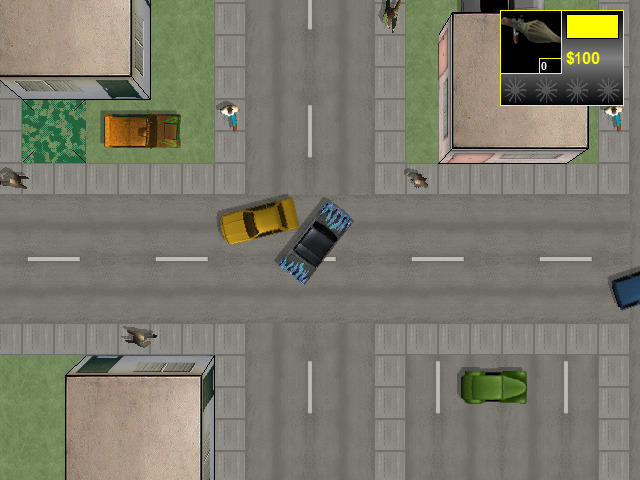 The whole game was assembled in about one week. It was then
the largest project Fionn had attempted and forced him to
begin finding actual logical solutions to development
problems, an alarming escalation in professionalism.
The whole game was assembled in about one week. It was then
the largest project Fionn had attempted and forced him to
begin finding actual logical solutions to development
problems, an alarming escalation in professionalism.
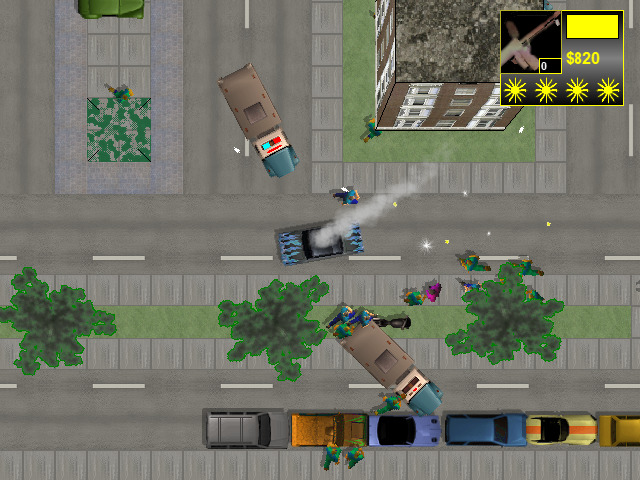 Although released largely as a joke, Boxville became
unexpectedly popular within the Game Maker community.
Contemporary reviews correctly identified numerous bugs,
but Fionn was pleased simply to have produced the novelty:
free-roaming Game Maker games were still unusual.
Although released largely as a joke, Boxville became
unexpectedly popular within the Game Maker community.
Contemporary reviews correctly identified numerous bugs,
but Fionn was pleased simply to have produced the novelty:
free-roaming Game Maker games were still unusual.
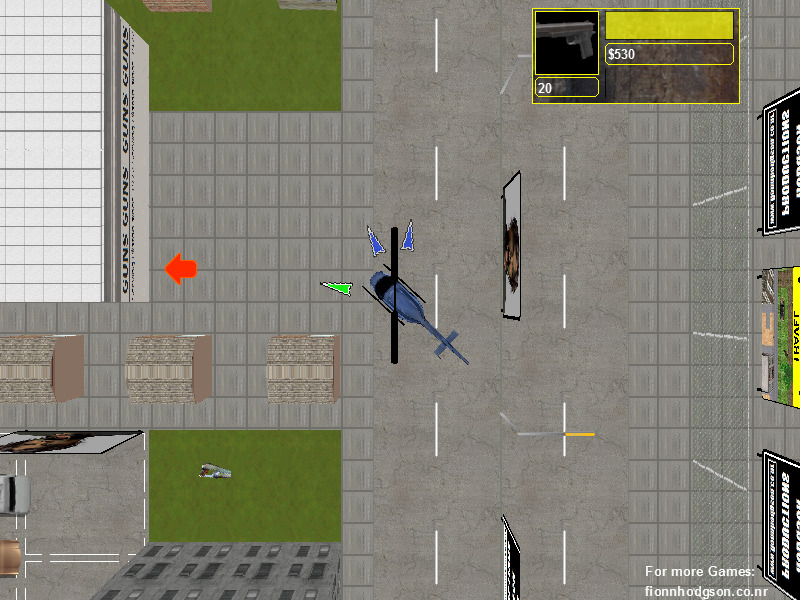
Following Boxville’s popularity, Fionn decided to build another GTA-style game that he might actually be proud of. Boxville took a week. Pliston occupied roughly six months.
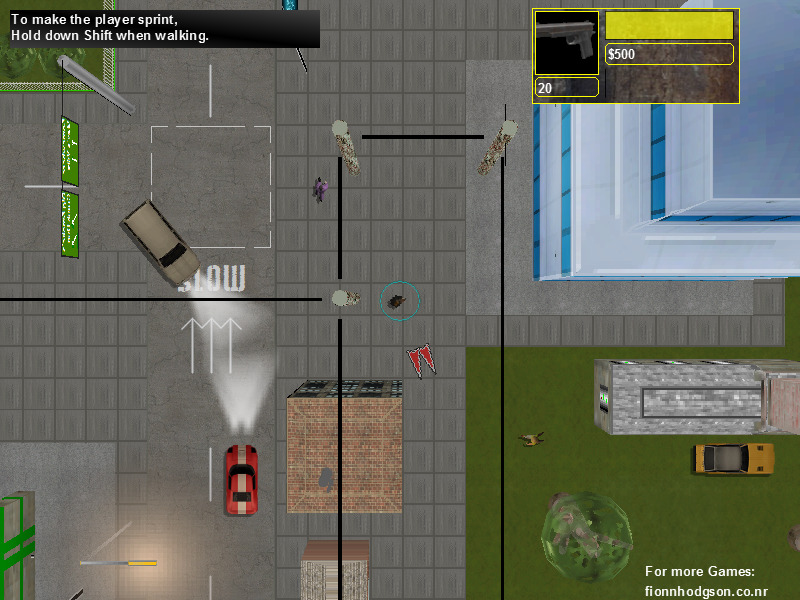 Pliston marks a substantial jump in Fionn’s understanding of
game development: texturing, model conversion and importing,
lighting, and fuller use of Game Maker’s 3D engine.
Pliston marks a substantial jump in Fionn’s understanding of
game development: texturing, model conversion and importing,
lighting, and fuller use of Game Maker’s 3D engine.
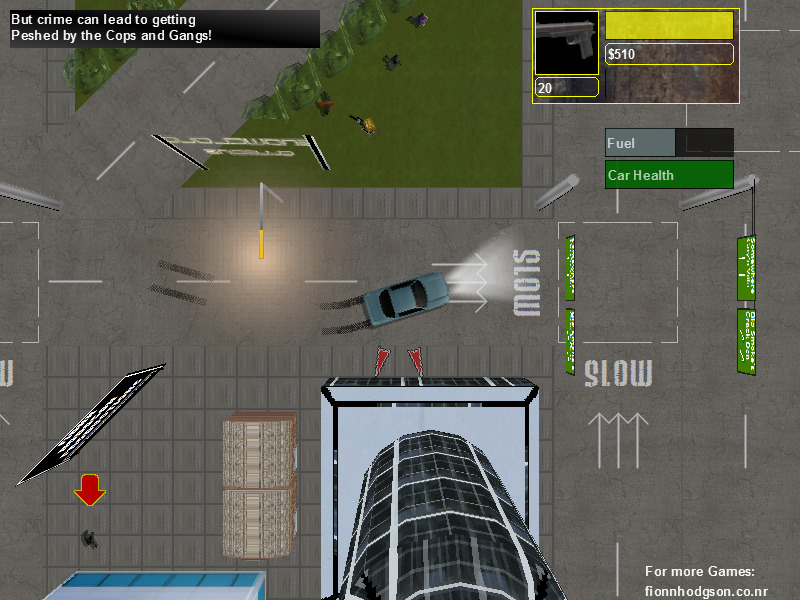 The setting became a deliberately dilapidated American city.
It was also the first Fionn game with properly written radio
dialogue: Pop, Jungle, House and Talk/Comedy.
The Hotline Café broadcasting department clearly had to begin
somewhere.
Pliston circulated around the scene for a year or two; today
its glitches make it more interesting as a preserved piece of
2006 Game Maker culture than as a polished modern game.
The setting became a deliberately dilapidated American city.
It was also the first Fionn game with properly written radio
dialogue: Pop, Jungle, House and Talk/Comedy.
The Hotline Café broadcasting department clearly had to begin
somewhere.
Pliston circulated around the scene for a year or two; today
its glitches make it more interesting as a preserved piece of
2006 Game Maker culture than as a polished modern game.
Stardog: The Slaves’ Alliance is an arcade-flavoured space combat game and loose successor to The Enemy Lines. This premium revision introduces full 360-degree movement and several firing modes.
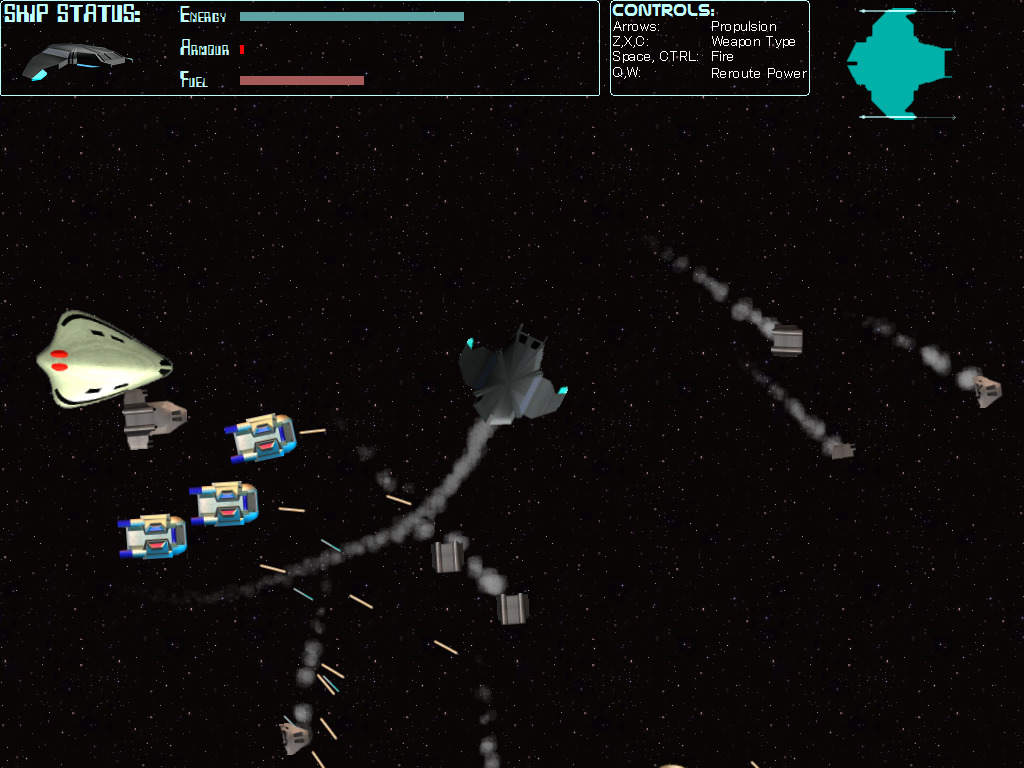 Energy, fuel and armour each receive their own health bar.
Energy can be rerouted to replenish fuel and armour, assuming
the player has a spare moment between incoming laser blasts.
Energy, fuel and armour each receive their own health bar.
Energy can be rerouted to replenish fuel and armour, assuming
the player has a spare moment between incoming laser blasts.
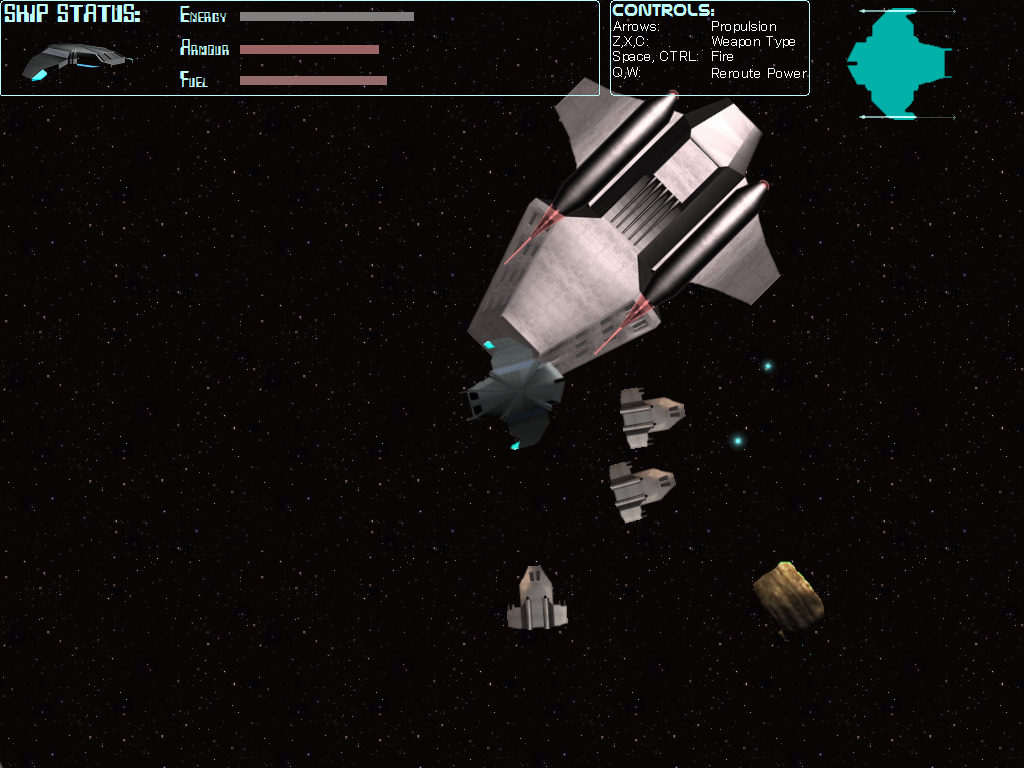 Fionn remembers Stardog fondly as a quick project. Its ships
reused old TrueSpace 3 models, while the soundtrack consists
of General MIDI arrangements of early Fruity Loops beats.
The whole thing apparently took three or four days.
Efficiency at last.
Fionn remembers Stardog fondly as a quick project. Its ships
reused old TrueSpace 3 models, while the soundtrack consists
of General MIDI arrangements of early Fruity Loops beats.
The whole thing apparently took three or four days.
Efficiency at last.
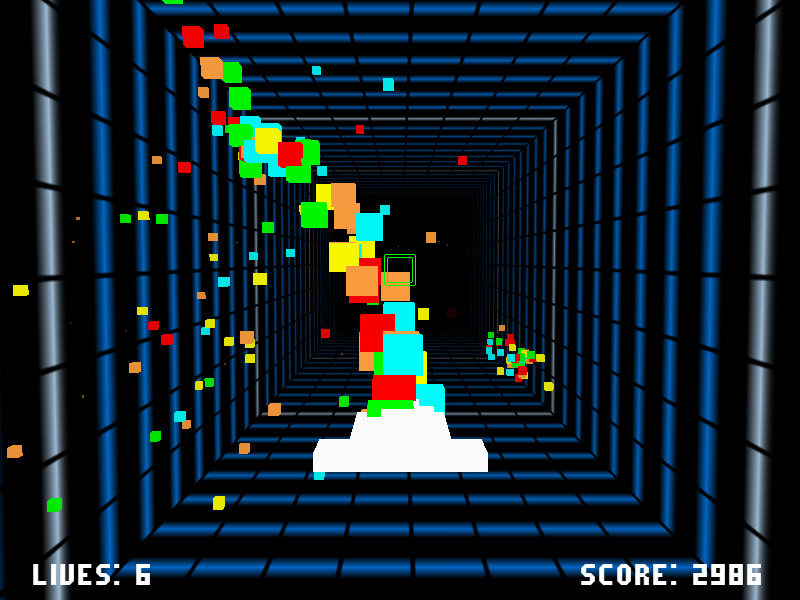
By 2008 Fionn was increasingly absorbed in electronic dance music, and Neon became an excuse to showcase it. Every level received a different track. The game pursued classic arcade priorities: abstract, colourful and loud.
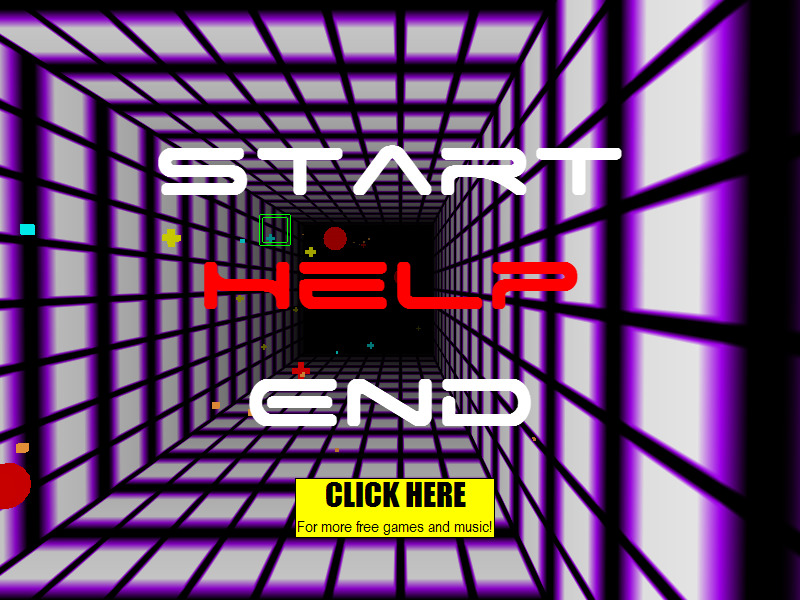 Players pilot a ship with the mouse through an apparently
endless 3D tunnel, avoiding and shooting coloured geometric
enemies.
Players pilot a ship with the mouse through an apparently
endless 3D tunnel, avoiding and shooting coloured geometric
enemies.
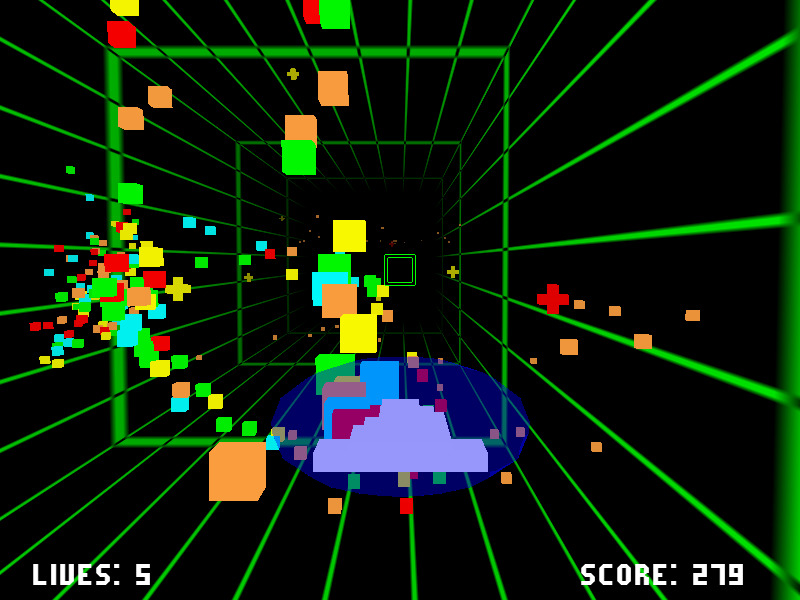 Fionn says playing it through today gives him a headache.
Difficulty rises across fifteen levels, followed by a jaunty
tune for anybody determined enough to reach the end.
Fionn says playing it through today gives him a headache.
Difficulty rises across fifteen levels, followed by a jaunty
tune for anybody determined enough to reach the end.
Download Editable GMK (3MB)
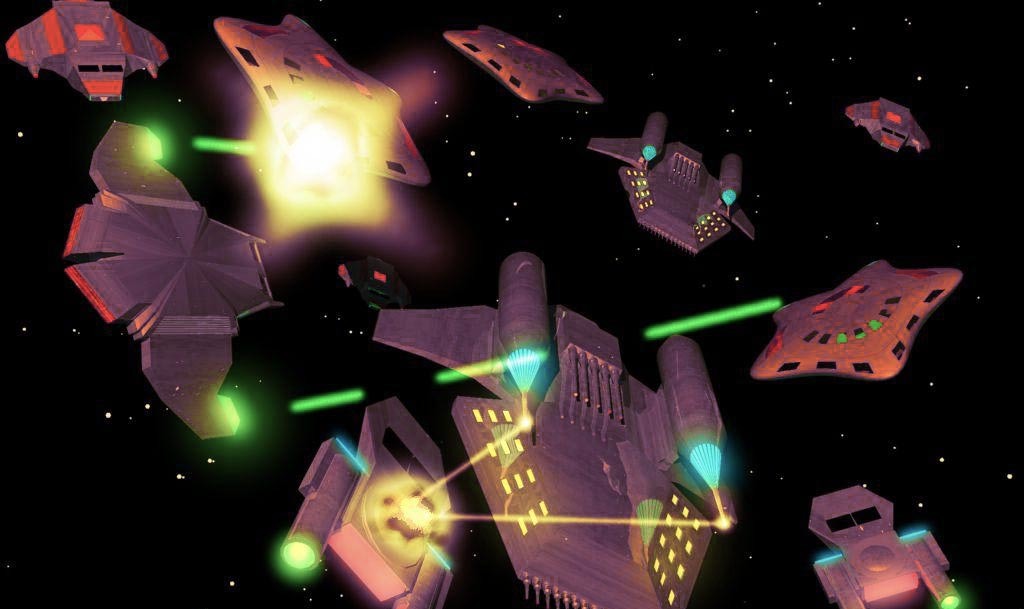
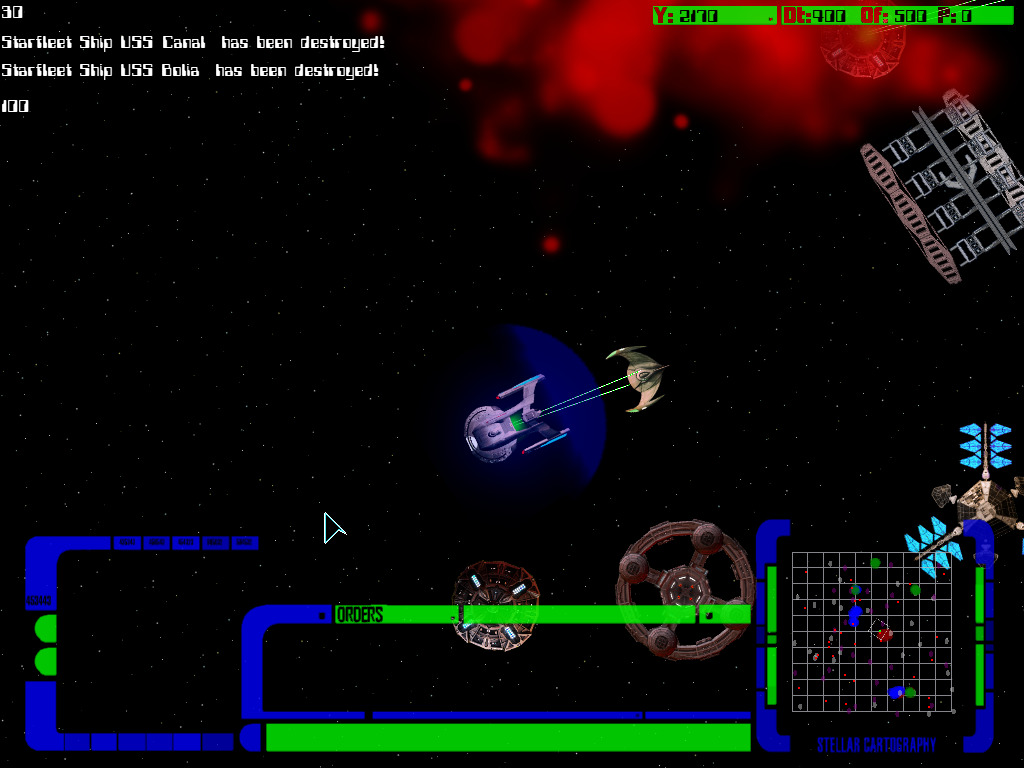
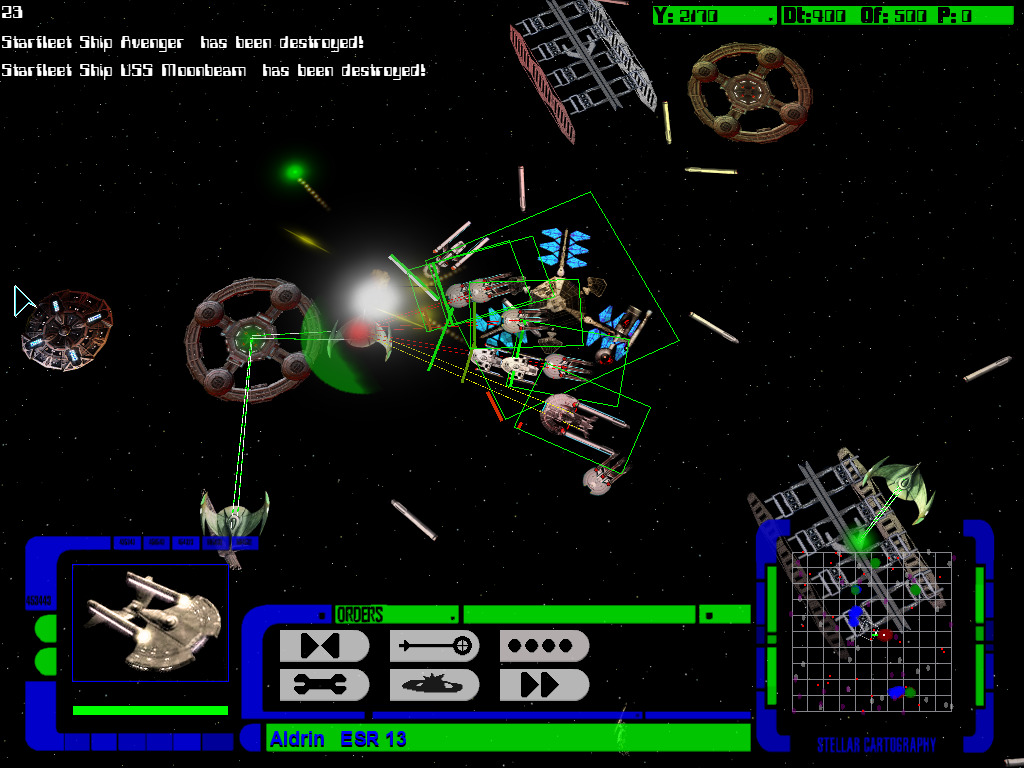 Plans were characteristically modest: approximately 300 years
of Trek history and every starship class Fionn could think of.
Considerable groundwork went into an RTS engine where ships
could level up into more advanced variants as the timeline
progressed.
Plans were characteristically modest: approximately 300 years
of Trek history and every starship class Fionn could think of.
Considerable groundwork went into an RTS engine where ships
could level up into more advanced variants as the timeline
progressed.
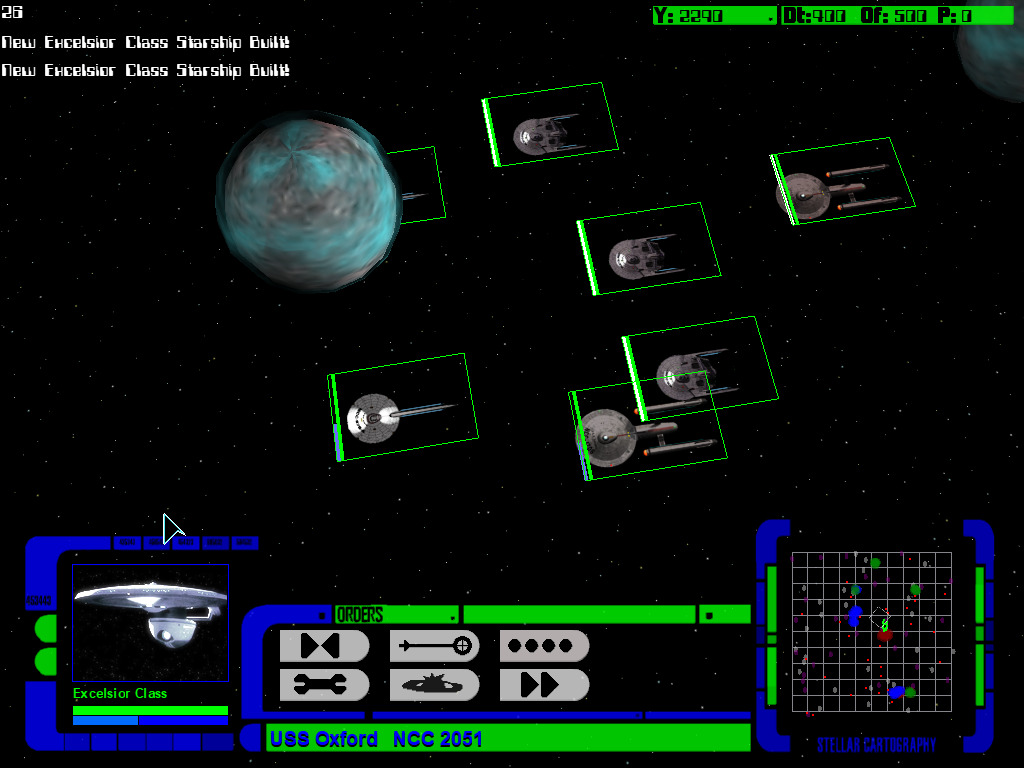 Code was written for the Borg, Romulans, Klingons, Gorn,
Suliban and Cardassians.
An attempt to model every vessel in 3D ended after the
Constitution and Excelsior classes, when common sense briefly
prevailed.
Code was written for the Borg, Romulans, Klingons, Gorn,
Suliban and Cardassians.
An attempt to model every vessel in 3D ended after the
Constitution and Excelsior classes, when common sense briefly
prevailed.
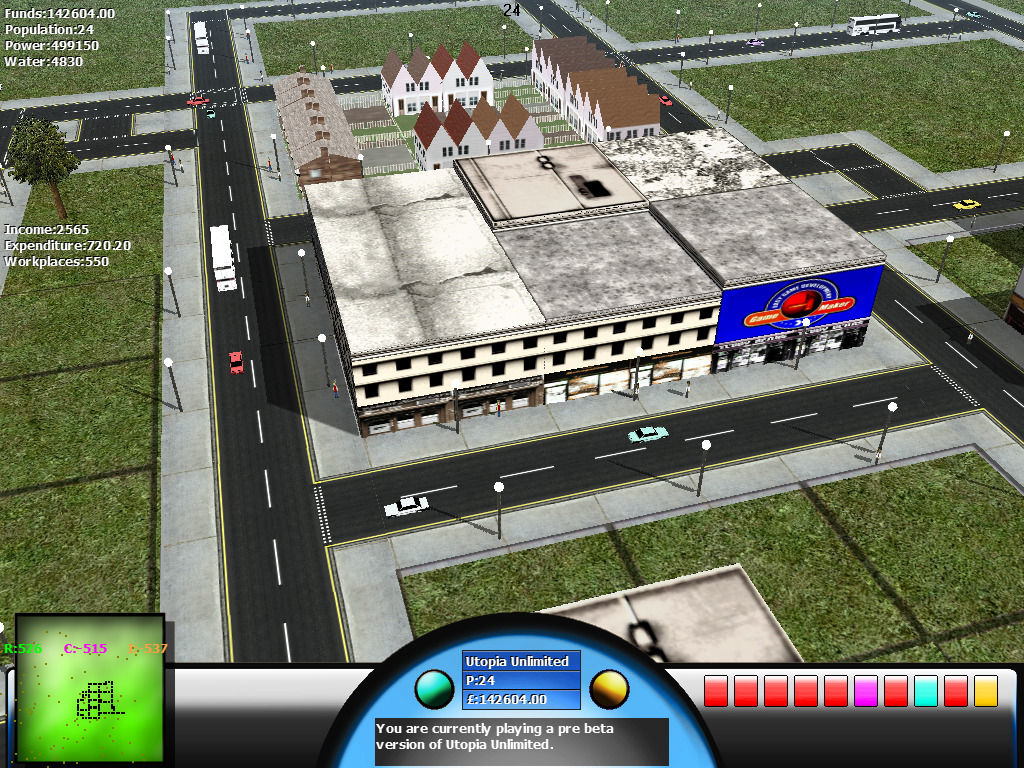
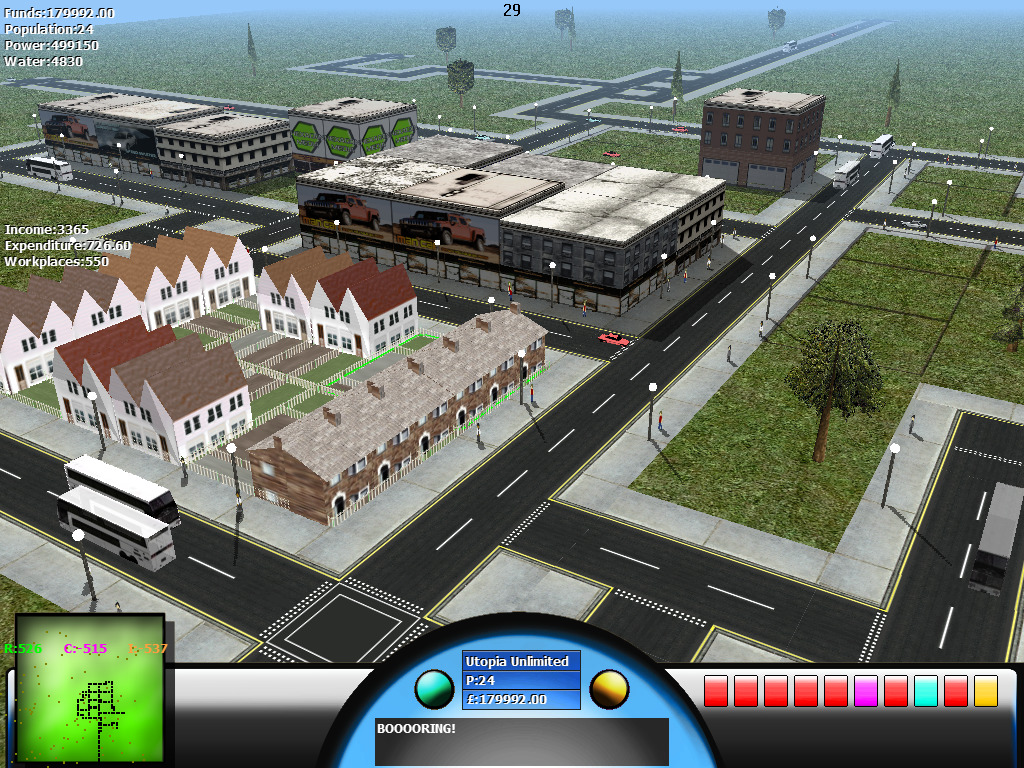
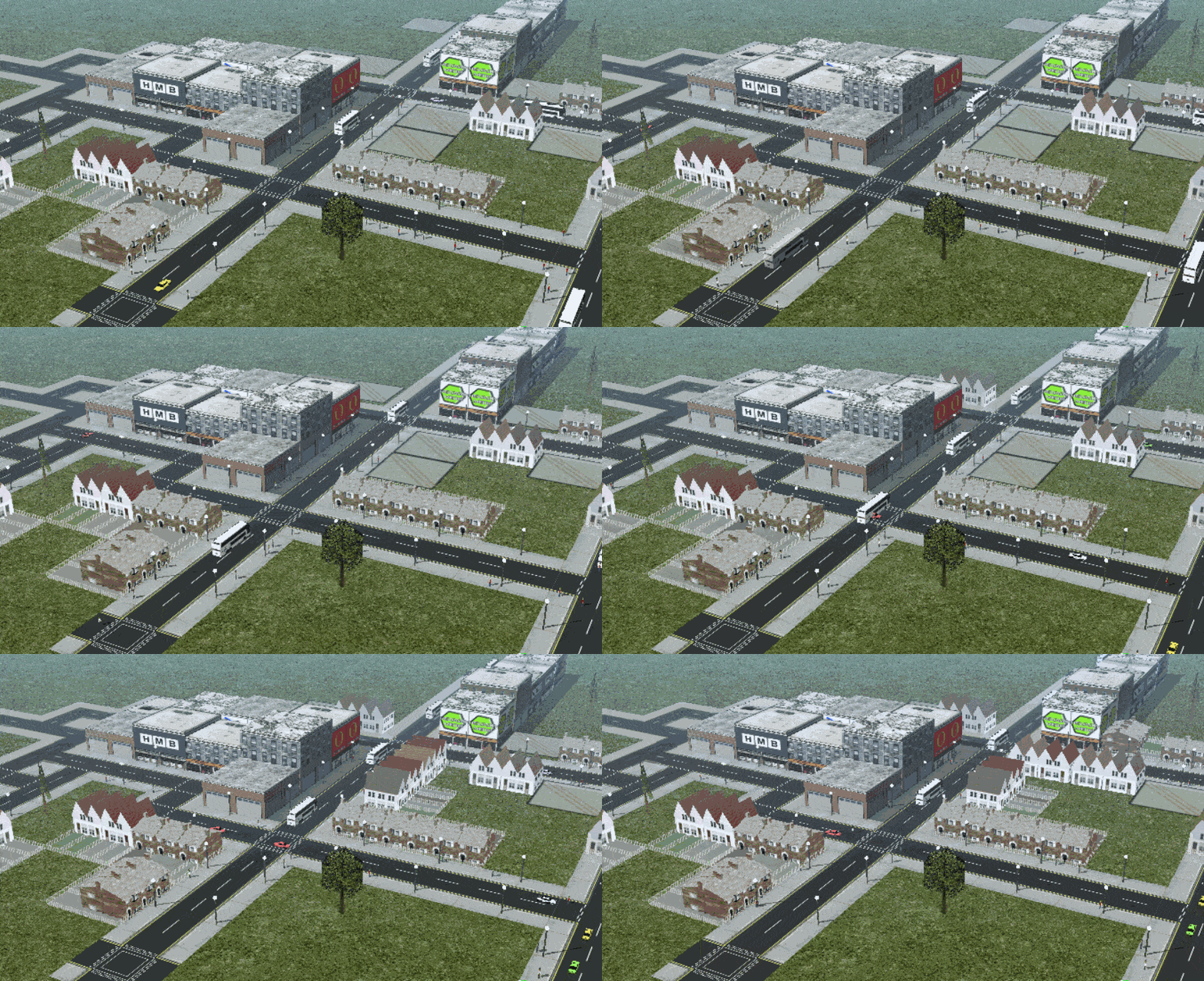 Development reached a reliable road-tiling system, a basic
economic model and early residential and commercial zones.
Fionn was particularly pleased with the illusion of bustling
streets populated by 3D traffic and pedestrians.
Development reached a reliable road-tiling system, a basic
economic model and early residential and commercial zones.
Fionn was particularly pleased with the illusion of bustling
streets populated by 3D traffic and pedestrians.
 The project ultimately hit severe performance problems once
cities reached a certain size.
Fionn says he could probably approach it differently today,
but at the time his programming experience was not enough to
realise a simulation of that scale.
Hotline Café respectfully preserves the unfinished metropolis
exactly where construction stopped.
The project ultimately hit severe performance problems once
cities reached a certain size.
Fionn says he could probably approach it differently today,
but at the time his programming experience was not enough to
realise a simulation of that scale.
Hotline Café respectfully preserves the unfinished metropolis
exactly where construction stopped.
⇑ Back to top

SITE DIRECTORY
サイト案内
またね! SEE YOU IN CYBERSPACE ♥